Polymarket vs Kalshi: Two Very Different Visions of Prediction Markets
Prediction markets have gone mainstream, and two platforms dominate the conversation: Polymarket and Kalshi. Both let you trade on real-world prediction market event outcomes. Both publish transparent market prices that rival mainstream forecasters for accuracy. But under the hood, they operate on fundamentally different models — different technology stacks, different regulatory structures, and different user bases.
Choosing between them isn't just a preference question. Depending on where you live, how you want to fund your account, and what types of markets interest you, one platform may simply not be available to you. This comparison breaks down every meaningful difference so you can make an informed decision.
Platform Overviews
What Is Polymarket?
Polymarket launched in 2020 and quickly became the world's largest prediction market by trading volume. It is a decentralized platform built on the Polygon blockchain. All trades are executed via smart contracts, and the platform uses USDC (USD Coin) as its currency. Because it is decentralized and permissionless, Polymarket does not require identity verification to use — you simply connect a Web3 wallet like MetaMask and start trading.
The decentralized architecture means Polymarket has no central authority controlling trades or holding your funds. Your USDC stays in your wallet until you place a trade. This is a significant structural advantage for privacy and self-custody, but it comes with a trade-off: Polymarket is not available to US residents due to regulatory restrictions. The platform's terms of service explicitly block US IP addresses.
What Is Kalshi?
Kalshi was founded in 2018 and took a deliberately opposite approach. Rather than building around existing crypto infrastructure, Kalshi spent years pursuing formal regulatory approval in the United States. In 2020, it became the first CFTC-regulated prediction market exchange in the US — a landmark achievement that gave it unique legal standing to offer event contracts to American users.
Kalshi is a centralized, regulated platform. It uses regular US dollars (USD), requires identity verification (KYC), and operates under the oversight of the Commodity Futures Trading Commission. This makes it the de facto choice for US-based traders who want to participate in prediction markets legally.
Key Differences at a Glance
| Feature | Polymarket | Kalshi |
|---|---|---|
| Platform Type | Decentralized (blockchain) | Centralized (regulated exchange) |
| Regulation | Unregulated / offshore | CFTC-regulated (US) |
| Available to US Users | No | Yes |
| Currency | USDC (stablecoin) | USD (fiat) |
| KYC Required | No | Yes |
| Custody | Self-custodial (your wallet) | Platform holds funds |
| Blockchain | Polygon (MATIC) | None (traditional fintech) |
| Copy Trading | Yes (via PolyCopyTrade) | No |
Regulation and Geography
This is the most important practical difference for most users. Kalshi is the only option if you are a US resident and want to trade legally. The CFTC registration means Kalshi can offer event contracts to Americans without legal jeopardy for either the platform or the user. For a full analysis of how Polymarket's regulatory status compares, see our full breakdown of whether Polymarket is legitimate and our dedicated article on Polymarket's legal status in the US.
Polymarket is accessible to users in most countries outside the US — including the UK, Europe, Australia, Canada, and most of Asia. Its decentralized architecture makes it technically resistant to geographic blocking, though the platform does geo-restrict US users at the application layer.
For non-US traders, both options are theoretically available (subject to local laws), but Polymarket's vastly larger volume and market selection makes it the more attractive choice for serious traders.
Market Selection
Polymarket operates with a much larger catalog of active markets. At any given time, Polymarket hosts hundreds of open markets across categories including politics, crypto, finance, sports, science, and entertainment. The platform grew explosively during the 2024 US presidential election cycle, recording over $3 billion in trading volume for election-related markets alone.
Kalshi's market selection is smaller but growing. Because every contract must receive CFTC approval, adding new market types requires regulatory review — a process that slows expansion. Kalshi focuses on high-quality markets in politics, economics, and finance. It recently won a court battle affirming its right to offer political event contracts, which is expected to accelerate its market growth significantly.
For breadth of choice, Polymarket wins decisively. For US-specific political and economic markets with regulatory backing, Kalshi is increasingly competitive. For a detailed assessment of the overall Polymarket experience, see our Polymarket platform review.
Fee Structure
Both platforms use a similar model where fees are charged on profitable positions rather than on every trade. Note that fee and profit structures also affect how winnings are taxed — if you're trading across multiple platforms, our Polymarket tax guide covers the US and UK treatment of prediction market profits.
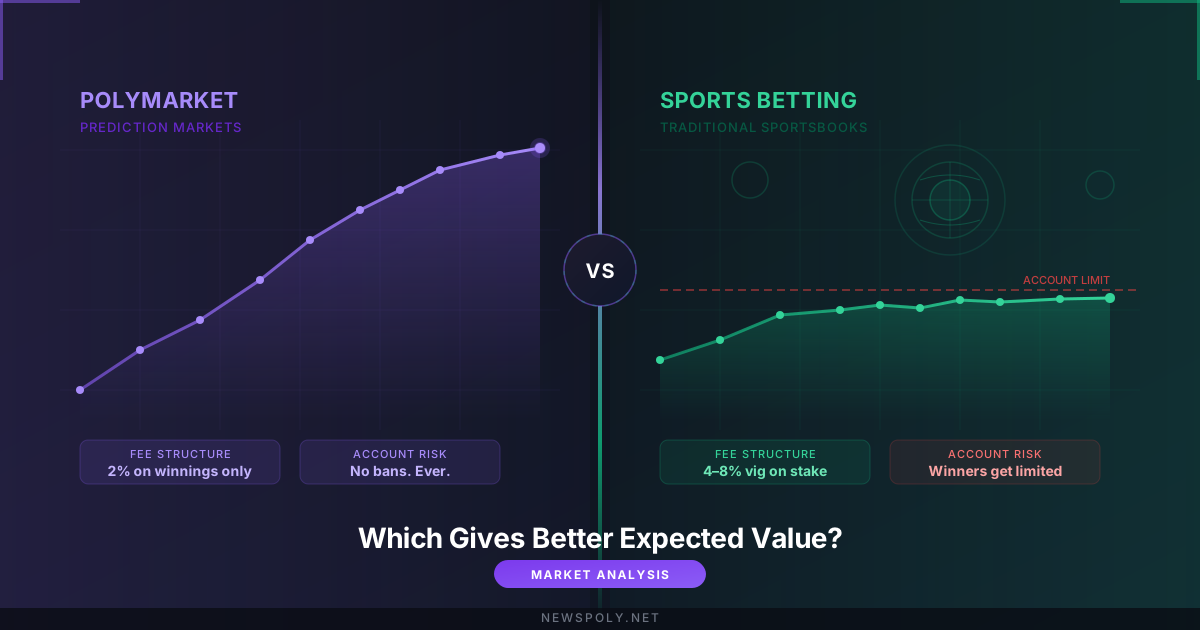
Polymarket charges a fee on winnings — currently around 2% of profits on resolved positions. There are no fees for placing trades, and losing positions carry no fee. Gas fees on Polygon are negligible (typically under $0.01 per transaction). See our Polymarket fees guide for a complete breakdown of costs.
Kalshi uses a maker-taker fee model common in traditional exchanges. Fees range from approximately 1–7% depending on the market and contract, with fees charged on the notional value of contracts. The exact fee structure varies by market category and is published on Kalshi's fee schedule page.
For active traders making many small trades, Polymarket's fee structure tends to be more favorable. Kalshi's per-trade fees can add up on high-frequency activity. Traders looking to maximise efficiency on Polymarket can also use Polymarket copy trading automation to replicate top-performing wallets without spending time on manual research.
Liquidity and Trading Volume
Liquidity is where the gap between the two platforms is most stark. Polymarket regularly processes tens of millions of dollars in daily trading volume. Its largest markets — US elections, Fed rate decisions, major crypto price events — routinely attract seven-figure liquidity pools, resulting in tight spreads and minimal price impact for even substantial trades.
Kalshi's liquidity is growing but remains significantly smaller. Thinner order books mean wider bid-ask spreads on many markets, which increases the effective cost of trading. For smaller retail positions this is manageable, but larger trades will face meaningful slippage on most Kalshi markets.
If liquidity depth matters to your trading strategy, Polymarket is the clear leader. The price differences that occasionally appear between the two platforms also create cross-platform arbitrage opportunities for traders who hold accounts on both — though real execution costs mean these gaps are rarer and smaller than they appear on paper.
Funding Your Account
Kalshi connects directly to US bank accounts via ACH transfer, making deposits and withdrawals straightforward for American users. No crypto knowledge is required — it works like any other financial app.
Polymarket requires USDC on the Polygon network. New users need either a crypto exchange account to purchase USDC, or they can use Polymarket's built-in fiat on-ramp (powered by Moonpay or similar providers) to buy USDC directly with a credit card or bank transfer. This extra step creates friction for crypto newcomers — if you're just getting started, our Polymarket beginner guide walks through the full setup process — though the process is well-documented and one-time.
Copy Trading: A Polymarket Exclusive Advantage
One capability that Polymarket offers — and Kalshi currently does not — is Polymarket copy trading. Because Polymarket is built on a public blockchain, every trade made by every wallet is permanently and transparently recorded on-chain. This makes it possible to identify consistently profitable traders and automatically replicate their positions.
PolyCopyTrade is a dedicated copy trading platform built specifically for Polymarket. You connect your wallet, choose which top-performing traders to follow, set your allocation limits, and the bot mirrors their trades in real time. It's a powerful way to participate in Polymarket's deep liquidity without needing to research individual markets yourself.
Kalshi's centralized architecture makes this kind of on-chain copy trading impossible — trade data is not publicly available in the same transparent way. Polymarket's on-chain data is also queryable via API, which you can explore in our guide to Polymarket's on-chain data.
Pros and Cons Summary
| Polymarket | Kalshi | |
|---|---|---|
| Pros |
Largest volume & liquidity Hundreds of active markets No KYC required Self-custodial (you control funds) Copy trading available Very low fees on winnings |
Legal for US residents CFTC regulated USD deposits (no crypto needed) Simple bank account funding Growing market selection Established legal standing |
| Cons |
Blocked for US residents Requires crypto wallet & USDC Unregulated / no formal recourse Learning curve for crypto newcomers |
Smaller liquidity & volume Fewer markets available Per-trade fees can be higher KYC required No copy trading US-only focus limits global markets |
The Verdict: Which Platform Should You Use?
If you are a US resident, Kalshi is your legal path into prediction markets. It is the only CFTC-regulated platform, and its USD-based model means you don't need to touch crypto. As Kalshi's market selection and liquidity continue to grow, it will become increasingly capable for American traders. If you're also considering play-money options for practice, our Polymarket vs Manifold Markets comparison covers that angle. For another direct platform comparison, see our Polymarket vs PredictIt analysis for how Polymarket stacks up against the other major US-accessible platform. For a broader look at how Polymarket stacks up against Kalshi, Betfair, Metaculus, and Manifold, see our Polymarket alternatives guide.
If you are outside the US, Polymarket is almost certainly the better choice. Its superior liquidity, vast market selection, lower effective fees, and copy trading infrastructure make it the professional-grade platform. The crypto wallet requirement is a one-time setup cost that pays dividends in access to the world's most active prediction market ecosystem.
For Polymarket users specifically, the on-chain transparency of the platform unlocks something Kalshi can never offer: the ability to identify and automatically copy the best traders on the platform. Tools like PolyCopyTrade turn this transparency into a genuine edge for non-expert traders who want professional-level results without doing the research themselves.
Frequently Asked Questions
Can US residents use Polymarket?
No. Polymarket's terms of service explicitly prohibit US residents from using the platform, and the site geo-restricts US IP addresses. US-based traders should use Kalshi, which is fully CFTC-regulated and legally available to Americans. Using a VPN to circumvent Polymarket's geo-restriction violates their terms of service and is not recommended.
Which platform has better liquidity — Polymarket or Kalshi?
Polymarket has significantly higher liquidity across almost all market categories. It regularly processes tens of millions of dollars in daily volume, with its largest markets attracting hundreds of millions in total liquidity. Kalshi is growing but remains considerably smaller. For large trades, Polymarket's tighter spreads and deeper order books result in meaningfully better execution prices.
Is there a copy trading option for Kalshi?
No. Kalshi is a centralized platform and does not publicly expose individual trader data in a way that enables copy trading. Polymarket, being blockchain-based, records every trade transparently on-chain — which is what makes copy trading platforms like PolyCopyTrade possible. This is a structural advantage that Polymarket holds over all centralized competitors.