Polymarket was geo-blocked for US users for nearly three years following a 2022 CFTC settlement. In February 2026, that changed: Polymarket re-opened access to US residents, marking one of the most significant regulatory developments in the prediction market industry. This guide covers exactly what that means, where things currently stand legally, and what US traders need to know before placing their first trade.
The Short Answer: Is Polymarket Legal in the US?
As of February 2026, yes — Polymarket is accessible to US users again. The platform operates as a prediction market offering event contracts, which are regulated differently from traditional gambling and sports betting. Polymarket reached a settlement with the Commodity Futures Trading Commission (CFTC) in 2022 and has since operated under closer regulatory scrutiny before re-opening to American users.
That said, the legal landscape for prediction markets in the US remains genuinely complex. Federal oversight, state-level gambling laws, and the ongoing regulatory debate around event contracts all intersect in ways that matter to anyone trading real money on the platform.
Why Was Polymarket Banned in the US Before?
In January 2022, the CFTC fined Polymarket $1.4 million for operating an unregistered facility for binary options trading — specifically, for offering event contracts without proper CFTC designation. As part of the settlement, Polymarket agreed to block US users and wind down existing US-based positions.
The key legal issue was not that prediction markets are inherently illegal in the US, but that Polymarket was offering them without going through the required regulatory process. CFTC-designated contract markets (DCMs) and swap execution facilities (SEFs) can legally offer event contracts in the US — Polymarket simply wasn't registered as one at the time.
Since then, Polymarket restructured its compliance approach, and in February 2026 re-opened access to American users under a revised operational framework. The exact terms of the revised arrangement have not been publicly disclosed in full, but the geo-block was lifted and US IP addresses can now access the platform directly.
Is Polymarket Legal in California?
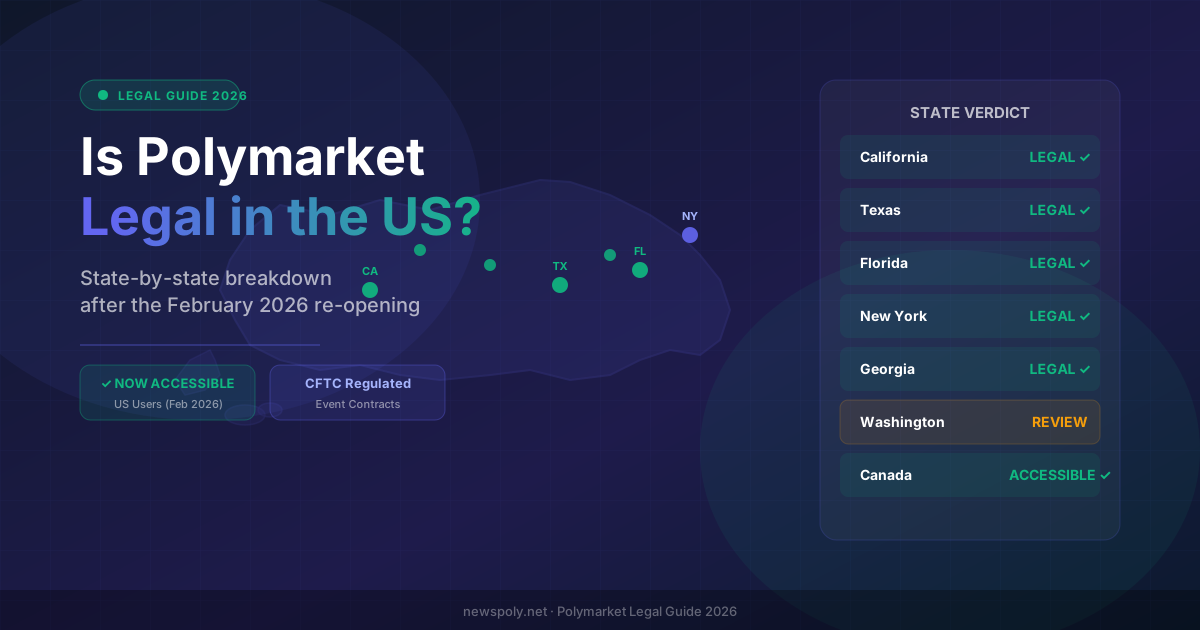
Yes. California has no state-specific law that prohibits participation in federally-regulated prediction markets. California residents can access and trade on Polymarket following the February 2026 US re-opening. California's gambling statutes focus on casino-style gambling and sports wagering through state-licensed operators; prediction market event contracts fall outside this framework at the federal level. New US traders can get up to speed quickly with our Polymarket beginner guide.
Is Polymarket Legal in Texas?
Yes. Texas gambling law similarly targets traditional gambling activities and licensed sportsbooks. Prediction market event contracts regulated at the federal level are not classified as gambling under Texas state law. Texas residents can use Polymarket without any state-specific legal concern.
Is Polymarket Legal in Florida?
Yes. Florida has a relatively permissive approach to financial trading products. Prediction market participation is not addressed specifically in Florida gambling statutes, and federally-compliant event contracts are not classified as gambling under Florida law. Florida residents can access Polymarket.
Is Polymarket Legal in New York?
New York has some of the most aggressive financial regulation of any US state. However, the legal question for Polymarket specifically turns on CFTC jurisdiction rather than New York state gambling law. Because event contracts fall under CFTC oversight as financial instruments, they sit outside the scope of New York's state gambling authority. New York residents can access Polymarket following the 2026 re-opening, though the broader regulatory environment in New York means this could be subject to change if state regulators take a different view.
Is Polymarket Legal in Georgia?
Yes. Georgia's gambling laws focus on casino gaming and sports wagering. Prediction markets operating as financial event contracts are not covered by Georgia's gambling statutes. Georgia residents can use Polymarket without state-level legal concerns.
Is Polymarket Legal in Washington State?
Washington State has historically been one of the strictest states on online gambling, including online poker. However, prediction market event contracts regulated by the CFTC are financial instruments, not gambling products under Washington's definition. The practical risk for Washington residents is lower than the state's reputation for strictness might suggest, though legal clarity at the state level remains imperfect. Washington residents can access Polymarket, but should be aware the state-level picture is less settled than other states.
Is Polymarket Legal in Canada?
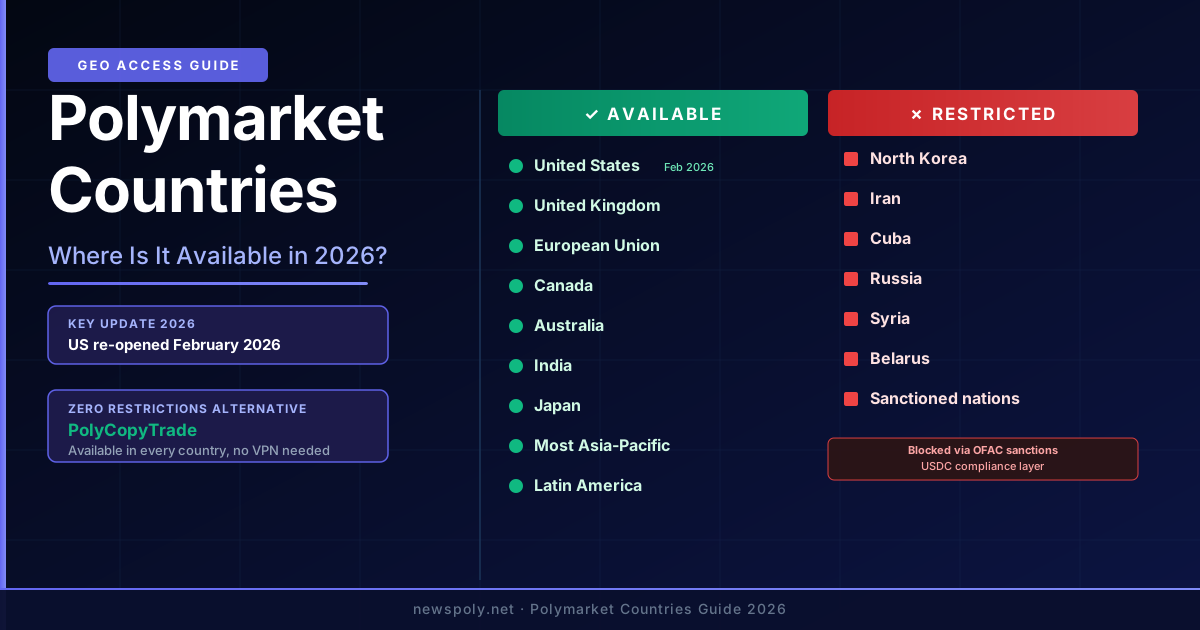
Canada operates a province-by-province gambling regulatory framework, but prediction markets as financial event contracts are not addressed by most provincial gambling statutes. Polymarket has not implemented country-wide geo-blocking for Canada, and Canadian residents can access and trade on the platform. The legal status is similar to the US situation prior to the 2022 CFTC action — there is no explicit prohibition, but also no explicit regulatory approval.
Is Polymarket Available in India?
India has complex and fragmented gambling laws that vary significantly by state. Online prediction markets occupy a legal grey area in India. Polymarket is technically accessible from India — there is no country-level block — but Indian residents should be aware that online gaming and gambling regulations in India are actively evolving, and the legal status of prediction market participation may change. For a full list of countries where Polymarket is and is not accessible, see our Polymarket countries guide.
Can Americans Use Polymarket With a VPN?
This question is now largely moot for most users — US access was restored in February 2026, so VPNs are not required to access the platform. Before the re-opening, some US users attempted to access Polymarket via VPN, which violated Polymarket's terms of service and carried real financial risk (accounts could be blocked and funds frozen). Using a VPN to circumvent geo-restrictions on a regulated financial platform is not a practice we recommend.
Is Polymarket a Regulated Broker or Exchange?
Polymarket is neither a broker nor a traditional exchange. It is a decentralised prediction market platform built on the Polygon blockchain, using USDC as its settlement currency. Trades execute via smart contracts rather than through a centralised order book.
This structure places Polymarket in a category that existing financial regulation was not specifically designed for. The CFTC has asserted jurisdiction over event contracts as commodity derivatives, but Polymarket's decentralised infrastructure means its regulatory classification continues to evolve. It is not registered as a CFTC designated contract market, which is part of why the 2022 settlement occurred. For US traders now accessing the platform, understanding the tax treatment of Polymarket profits is equally important — on-chain trading income is reportable and the IRS treats it differently from gambling winnings.
How Does Polymarket Differ From Gambling?
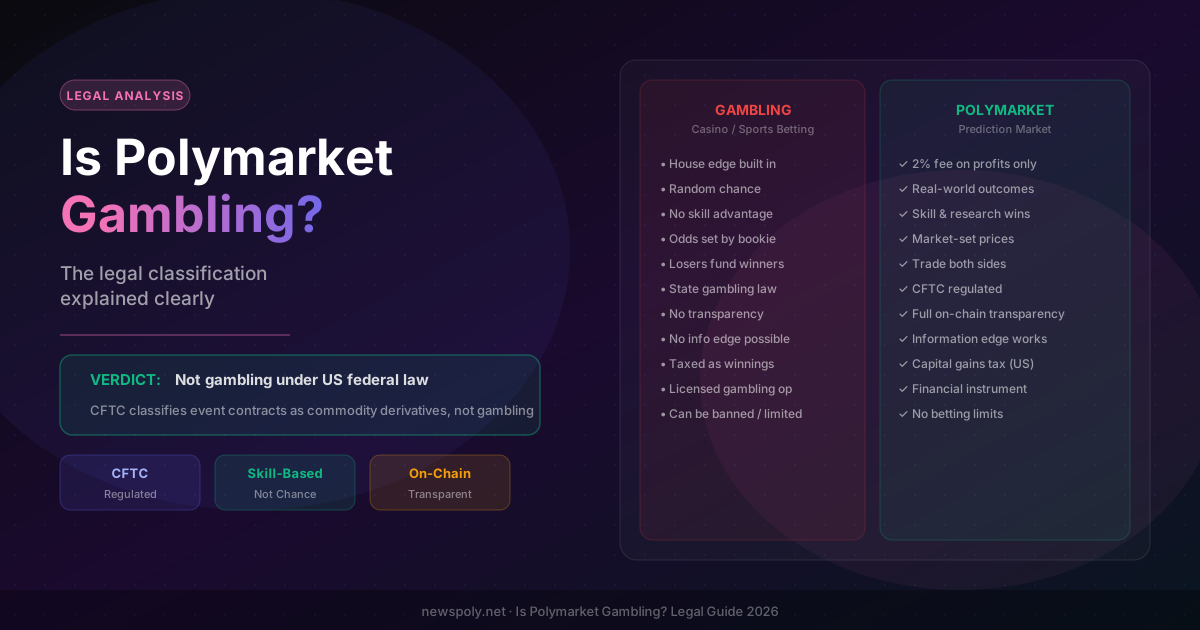
The distinction matters legally and practically. Traditional gambling involves wagering on chance-based outcomes where the house takes a built-in edge. Prediction markets function more like financial markets: prices reflect aggregated probabilistic beliefs, participants can trade both sides of any outcome, and outcomes are real-world events with publicly verifiable resolutions.
The legal relevance: most US state gambling laws define gambling around games of chance with a house edge. Prediction markets — where you're trading against other market participants based on information and analysis — don't meet that definition in most jurisdictions. This is the legal foundation for the CFTC's view that event contracts are commodity derivatives, not gambling products. For a full breakdown of this distinction, see our guide to whether Polymarket is gambling.
What Changed With the February 2026 US Re-Opening?
The specific terms of Polymarket's compliance arrangement for the US re-opening have not been fully disclosed. What is publicly known:
- US IP addresses can now access Polymarket directly without geo-blocking
- KYC (Know Your Customer) requirements were strengthened as part of Polymarket's broader compliance overhaul — for a detailed assessment of Polymarket's security model and smart contract safety, see our guide to whether Polymarket is safe
- US users are subject to the same terms of service as international users
- The CFTC settlement from 2022 remains in place and Polymarket operates under its terms
For a full assessment of the platform’s credibility, fee structure, and trading environment following the re-opening, see our Polymarket review 2026. The re-opening was widely covered in financial media. CNBC confirmed the development in February 2026, noting it as a significant moment for the prediction market industry's regulatory legitimacy in the United States.
Polymarket vs Kalshi: Which Is Better for US Residents?
Kalshi is the primary CFTC-registered alternative for US residents seeking a fully regulated prediction market. For a broader comparison of Polymarket against all major competitors — including Kalshi, Betfair, Metaculus, and Manifold — see our guide to Polymarket alternatives. Kalshi operates as a designated contract market, meaning it has full legal clarity for US users. Its trade-offs: lower liquidity than Polymarket on most markets, a different market selection, and a centralised infrastructure that lacks Polymarket's on-chain transparency.
For US residents who want the on-chain transparency and liquidity depth of Polymarket — and the ability to use automated copy trading tools — Polymarket's February 2026 re-opening makes it accessible again. For those who prioritised regulatory certainty above all else, Kalshi remains the more formally regulated option. PolyCopyTrade's automated copy trading works specifically with Polymarket's on-chain infrastructure — a capability Kalshi's closed architecture cannot support.
Frequently Asked Questions
Is Polymarket legal in the US in 2026?
Yes. Polymarket re-opened access to US users in February 2026 following a restructured compliance arrangement. US residents can now access and trade on Polymarket directly. The platform remains subject to the 2022 CFTC settlement terms and operates under ongoing regulatory scrutiny.
Why was Polymarket banned in the US?
Polymarket was geo-blocked for US users following a January 2022 CFTC settlement in which Polymarket paid a $1.4 million fine for operating an unregistered binary options facility. The ban was not because prediction markets are inherently illegal in the US, but because Polymarket lacked the required CFTC registration at the time.
Can Americans bet on Polymarket?
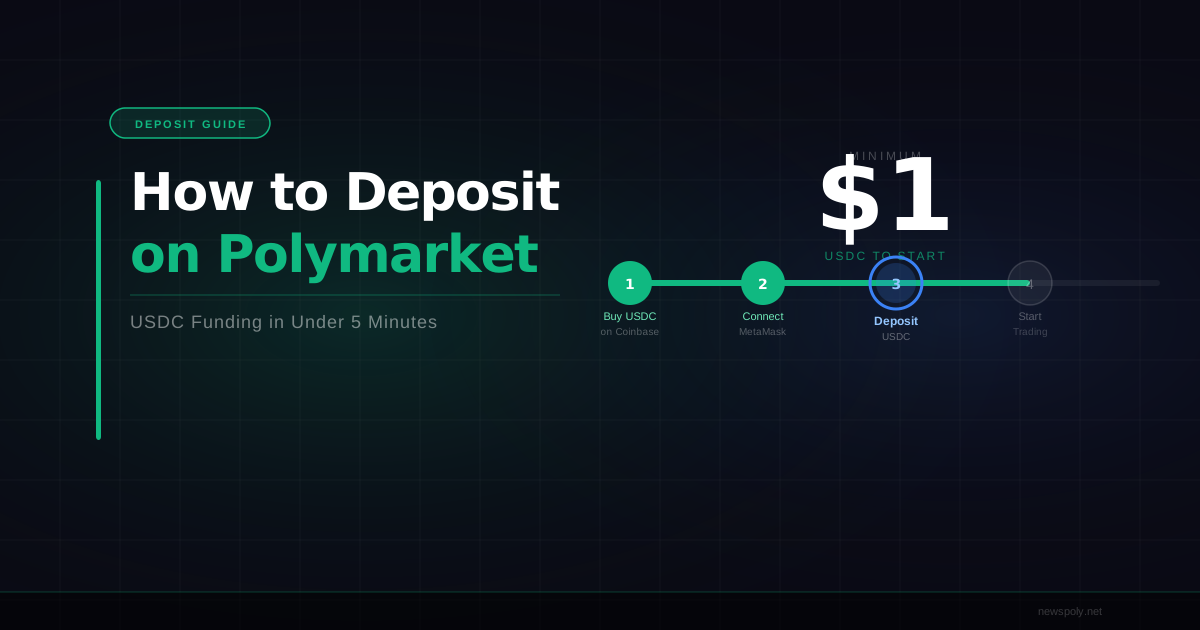
Yes, as of February 2026. US residents can access Polymarket, create accounts, deposit USDC, and trade prediction market contracts. Standard KYC verification applies. The platform uses USDC on the Polygon blockchain rather than traditional fiat deposits.
Is Polymarket legal in all 50 US states?
No blanket state-by-state legal ruling exists for prediction markets in the US. Federal CFTC jurisdiction generally preempts state gambling law for event contracts classified as commodity derivatives. In practice, US residents across all 50 states can access Polymarket following the 2026 re-opening, but the formal legal picture varies by state, and Washington State in particular has historically stricter online gaming regulations.
Does PolyCopyTrade work in the US and other restricted countries?
PolyCopyTrade operates with no country restrictions. The bot works with your own non-custodial wallet and the Polymarket smart contract infrastructure — there is no geographic barrier to using it from the US, Canada, India, or any other location. You connect your wallet once, configure your position limits, and the automation runs regardless of where you are located.