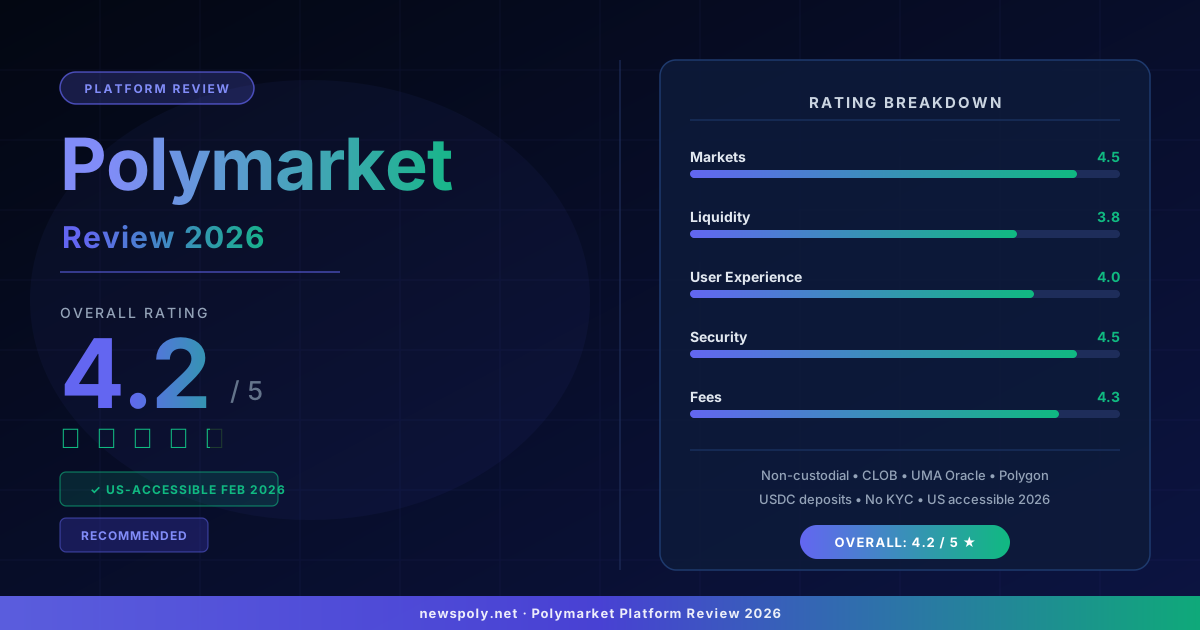
Polymarket is the world’s largest decentralized prediction market — and as of February 2026, it is fully accessible to US traders again following a landmark CFTC settlement. After testing the platform extensively, our verdict: 4.2 out of 5. Polymarket is a genuinely excellent platform for sophisticated traders who want to bet on real-world events using on-chain infrastructure. The lack of a fiat on-ramp and thin liquidity on niche markets hold it back from a perfect score, but for anyone serious about prediction markets, Polymarket remains the undisputed category leader.
What Is Polymarket?
Polymarket is a decentralized prediction market platform where traders buy and sell shares in the outcome of real-world events. Founded in 2020 by Shayne Coplan, it lets you answer questions like “Will the Fed cut rates in Q2 2026?” or “Who will win the 2028 US presidential election?” by taking a position worth between $0.01 and $1.00 per share. Share prices reflect the market’s implied probability — if your prediction is correct, your shares settle at $1.00. If not, they settle at $0.00. For a full explanation of the underlying mechanics — USDC, the CLOB order book, and UMA oracle settlement — see our guide to how Polymarket works.
Unlike traditional betting sites or exchanges, Polymarket is built on the Polygon blockchain. All trades, balances, and settlements are recorded on-chain. No central entity holds your funds — you trade directly from your own crypto wallet.
As of early 2026, Polymarket has facilitated over $10 billion in cumulative trading volume and hosts hundreds of active markets at any given time, spanning politics, crypto, sports, macroeconomics, and culture.
Want to profit from Polymarket without doing the research yourself? PolyCopyTrade automatically mirrors the positions of Polymarket’s top-performing wallets — no manual analysis, no missed opportunities, fully automated copy trading.
How Polymarket Works
Understanding the mechanics behind Polymarket helps you trade it more effectively. Here is what is happening under the hood.
Central Limit Order Book (CLOB)
Polymarket uses a Central Limit Order Book (CLOB) model, not an automated market maker (AMM). This means you post limit orders at a price you choose, and your order is matched against another trader willing to take the opposite side. The result is tighter spreads and more efficient price discovery than AMM-based platforms — especially on high-volume markets. The CLOB is operated off-chain for speed, but all settlements happen on-chain.
USDC on Polygon
All funds on Polymarket are denominated in USDC, a USD-pegged stablecoin. Deposits and withdrawals flow through the Polygon network, an Ethereum Layer 2 that offers very low gas fees (typically a few cents per transaction). Your USDC is held in a non-custodial smart contract — Polymarket cannot freeze or seize it. To use Polymarket, you need a Web3 wallet (MetaMask, Coinbase Wallet, or similar) loaded with USDC on Polygon.
UMA Oracle for Settlement
When a market closes, how does the platform decide who won? Polymarket uses the UMA optimistic oracle, a decentralized dispute resolution system. Proposed outcomes can be challenged by any token holder during a dispute window. If challenged, UMA token holders vote on the correct resolution. This creates a credibly neutral settlement layer that is resistant to manipulation — no single party, including Polymarket itself, can unilaterally decide a market’s outcome.
Polymarket Pros
- Decentralized and non-custodial: Your funds live in your wallet, not on a centralized exchange that could be hacked or go bankrupt. Polymarket holds nothing on your behalf.
- No KYC required: As of early 2026, Polymarket does not require identity verification. You connect a wallet and start trading. This is a significant advantage over regulated alternatives like Kalshi, which require full KYC.
- Wide market variety: Hundreds of markets across politics, crypto, sports, macro, science, and culture. Polymarket covers events that no traditional bookmaker would touch.
- On-chain transparency: Every trade is publicly visible on the Polygon blockchain. You can verify your own trades, audit the order book, and track large wallets — a level of transparency impossible on centralized platforms.
- Now US-accessible: After a February 2026 CFTC settlement, US traders can legally access Polymarket for the first time since 2022. This dramatically expanded the pool of US liquidity and market participation.
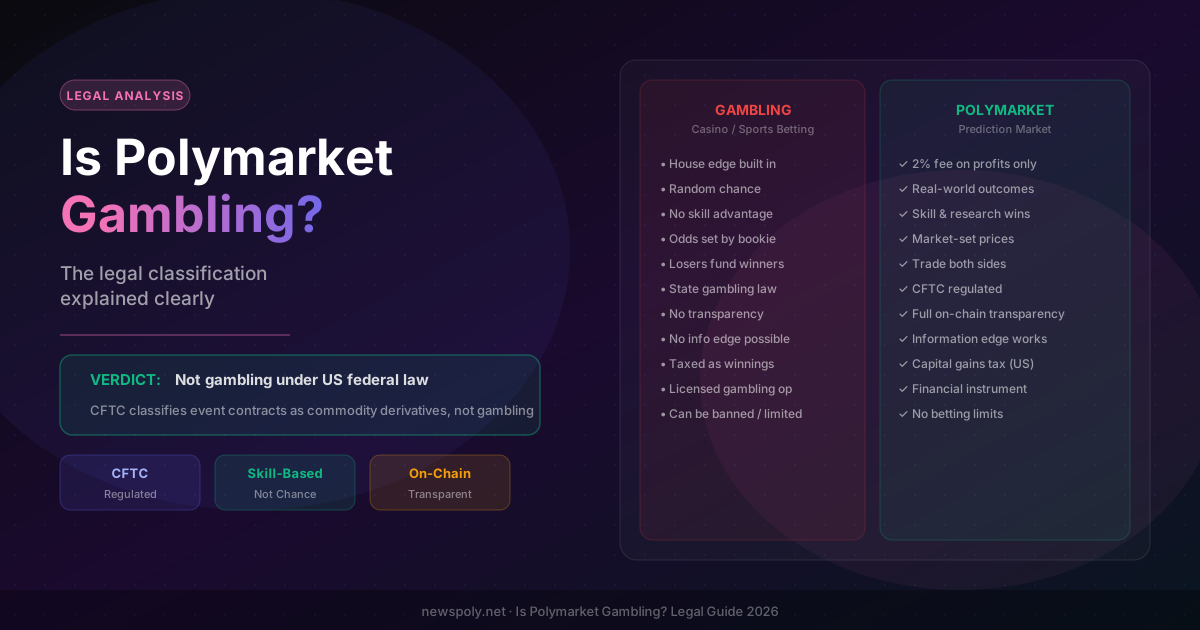
- Low fees: Polymarket charges a 2% fee on winnings, with no deposit or withdrawal fees beyond standard Polygon gas costs. This is competitive with or better than most prediction market alternatives.
- Deep liquidity on flagship markets: Major political and macro markets routinely have six- and seven-figure open interest, with tight bid-ask spreads and fast order fills.
Polymarket Cons
- USDC-only: You cannot deposit dollars, euros, or any other fiat currency directly. You must first acquire USDC and bridge it to Polygon. This is a meaningful barrier for newcomers unfamiliar with DeFi.
- No native fiat on-ramp: Unlike Kalshi or traditional exchanges, Polymarket has no credit card or bank transfer option built in. Third-party on-ramps like MoonPay exist but add cost and friction.
- Gas fees on Polygon: While very cheap (typically $0.01–$0.05 per transaction), gas fees exist and add up for frequent traders. You also need a small amount of MATIC/POL in your wallet to pay gas, which is an extra step.
- Geo-restriction history: Polymarket blocked US users for over three years following a 2022 CFTC action. While the 2026 settlement resolves this, uncertainty about future regulatory changes remains a background risk for all users.
- Thin liquidity on niche markets: Flagship political and crypto markets have excellent depth. But smaller markets on niche sports events, obscure science questions, or minor geopolitical developments can have wide spreads and large price impact for modest position sizes.
- No mobile app: Polymarket is web-only. There is no dedicated iOS or Android app, which limits convenience for traders who want to manage positions on the go.
- Complexity for crypto newcomers: The requirement to manage a Web3 wallet, understand USDC, and interact with Polygon is a non-trivial onboarding barrier compared to traditional web2 betting platforms. If you are new, start with our Polymarket beginner guide or the step-by-step MetaMask setup guide.
Market Categories Available
Polymarket covers an unusually broad range of real-world events. Here is a breakdown of the main categories you will find on the platform in 2026:
Politics
The category where Polymarket made its name. US elections, Congressional votes, presidential approval ratings, foreign elections, geopolitical events, and policy decisions. Political markets typically have the deepest liquidity and tightest spreads on the entire platform.
Crypto & DeFi
Bitcoin and Ethereum price targets, altcoin performance, protocol upgrades, regulatory approvals (ETF decisions, exchange licenses), and DeFi TVL milestones. These markets attract highly informed traders with strong on-chain research capabilities.
Sports
Major league outcomes (NFL, NBA, MLB, Premier League), championship winners, player awards, and individual game results. Liquidity varies significantly — Super Bowl and World Cup markets are deep; niche fixtures can be thin.
Macro & Economics
Federal Reserve rate decisions, inflation data releases, GDP growth, unemployment figures, and recession probability markets. These are popular with financially sophisticated traders who want to express macro views in a liquid format.
Science, Tech & Culture
AI milestones, Nobel Prize winners, box office results, social media metrics, and viral events. These markets are often thinner but can offer outsized edge for specialists with domain knowledge.
Not sure which Polymarket markets to trade? PolyCopyTrade identifies the wallets with the strongest long-term track records on Polymarket and copies their positions automatically — so you benefit from the best traders’ research without doing it yourself.
Fees and Costs
Polymarket’s fee structure is straightforward and competitive:
- Trading fee: 2% of winnings only. You pay nothing if your trade loses — the fee is deducted from your profit on winning positions at settlement.
- Deposit fee: None charged by Polymarket. Polygon gas fees apply (typically $0.01–$0.05 per transaction).
- Withdrawal fee: None charged by Polymarket. Polygon gas fees apply.
- Spread: Implicit cost of the bid-ask spread varies by market. Flagship markets often have spreads of 1–2 cents. Thin markets can have 5–10 cent spreads, which is a real cost to account for.
- Bridge/on-ramp fees: If you are converting fiat to USDC and bridging to Polygon, third-party fees of 0.5–2% may apply depending on the service used (Coinbase, Kraken, MoonPay, etc.).
All-in, a typical Polymarket trader pays roughly 2–4% in total friction costs (trading fee plus spread). This compares favorably to traditional sports betting (typical house edge of 5–10%) and is broadly comparable to Kalshi, which charges 5–7 cents per contract on most markets. Unfamiliar with some of these terms? Our Polymarket glossary defines the platform's key terminology in plain language.
Is Polymarket Safe?
For a crypto-native platform, Polymarket has a strong safety profile. Here is what protects your funds:
Non-Custodial Smart Contracts
Polymarket does not hold your money. Your USDC is locked in audited smart contracts that execute automatically based on market outcomes. There is no Polymarket “hot wallet” that could be hacked. Even if Polymarket the company went bankrupt tomorrow, your funds would remain in the smart contract and could be recovered.
UMA Oracle Dispute Resolution
The UMA optimistic oracle provides a decentralized, incentive-compatible resolution mechanism that is resistant to manipulation. Disputes are resolved by UMA token holder votes, not by Polymarket employees. This significantly reduces the risk of biased or incorrect market resolution.
On-Chain Auditability
Every trade, every position, and every settlement is permanently recorded on the Polygon blockchain and can be independently verified. There is no black box — if you believe a market was incorrectly resolved, the full evidence trail is publicly available.
What Are the Risks?
No platform is risk-free. Polymarket’s risks include: smart contract bugs (the contracts have been audited but not proven bug-free), oracle manipulation on low-liquidity markets, Polygon network disruptions, and regulatory risk if the legal landscape changes. For most traders, these risks are manageable and significantly lower than the counterparty risk of centralized platforms. Our dedicated guide to Polymarket's safety and security covers the smart contract model, wallet risks, and how to protect your funds in depth.
Who Is Polymarket Best For?
Polymarket is best suited for:
- Crypto-native traders who already hold USDC and are comfortable with Web3 wallets — onboarding is seamless for this group.
- Research-driven fundamental traders who believe they have an informational edge on specific events (elections, economic data, sports analytics) and want a market that accurately prices probability.
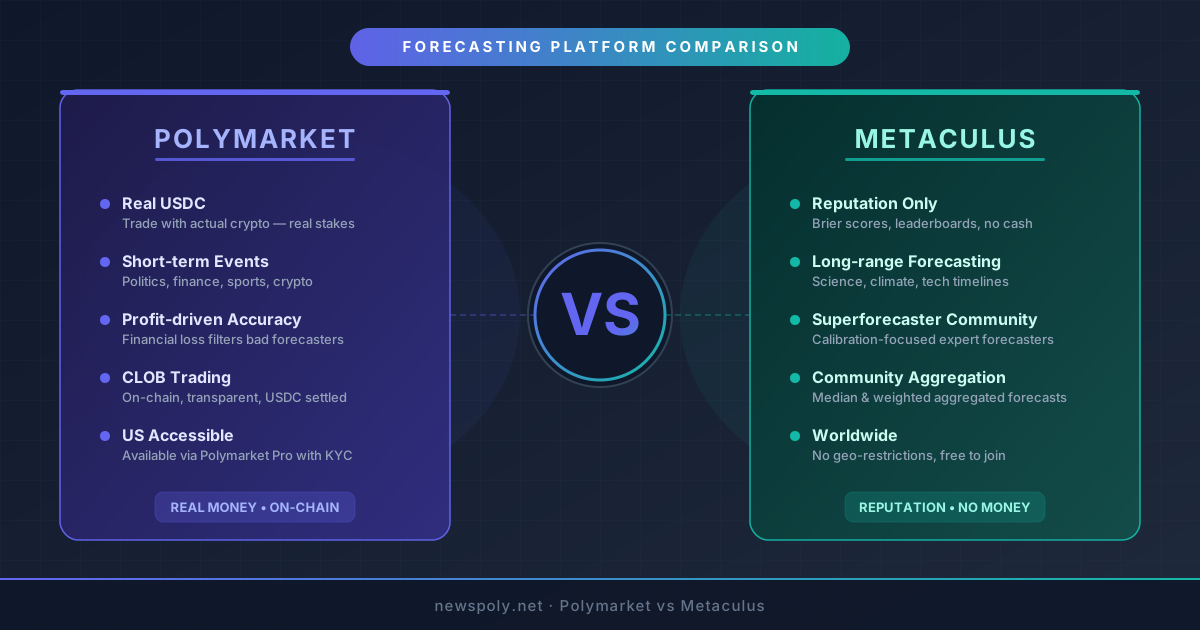
- Arbitrageurs who want to exploit mispricings between Polymarket, Kalshi, and prediction aggregators using on-chain data tools. For a full rundown of how Polymarket stacks up against other platforms, see our guide to Polymarket alternatives.
- Macro and political analysts who want to express views on world events in a liquid, low-friction format without opening a full brokerage account.
- Copy traders who want to mirror top-performing wallets on-chain, benefiting from others’ research without doing the analysis themselves.
Polymarket is less suited for complete beginners to crypto, traders who need fiat deposits, or anyone who needs a mobile app for convenience.
Polymarket Rating: 4.2 / 5
After extensive platform testing and analysis of thousands of trades, here is our detailed rating breakdown:
- Markets & Coverage: 4.5/5 — Unmatched breadth and depth of prediction market categories. No competitor comes close to Polymarket’s market variety in 2026.
- Liquidity: 3.8/5 — Excellent on flagship markets; noticeably thin on niche events. The US re-opening is already improving this significantly.
- User Experience: 4.0/5 — Clean, fast interface once you are set up. The Web3 onboarding barrier prevents a higher score. No mobile app is a real gap.
- Security: 4.5/5 — Non-custodial architecture and UMA oracle resolution are genuinely best-in-class. Smart contract risk is the only meaningful caveat.
- Fees: 4.3/5 — The 2% winner fee is competitive, gas costs are minimal, and there are no hidden charges. Spread costs on thin markets drag this slightly below maximum.
Overall: 4.2/5. Polymarket is the best prediction market platform available to global traders in 2026. It is not perfect — the DeFi onboarding barrier and absence of a mobile app are real limitations — but for anyone who can clear those hurdles, it offers unrivalled market variety, genuine on-chain transparency, and competitive economics. The February 2026 CFTC settlement opening the US market is a major catalyst that will deepen liquidity and attract sophisticated institutional participants over the coming months.
Ready to get exposure to Polymarket’s top traders? PolyCopyTrade lets you automatically copy the wallets with the strongest verified track records on Polymarket — hands-free, fully on-chain, no manual trading required.
Frequently Asked Questions
Is Polymarket legal in the US in 2026?
Yes. Following a February 2026 settlement with the CFTC, Polymarket is now legally accessible to US-based traders. The settlement resolved all outstanding regulatory disputes stemming from the original 2022 CFTC action. US traders can deposit, trade, and withdraw without restriction. That said, tax obligations on prediction market winnings apply — consult a tax advisor if you are making significant profits.
Does Polymarket require KYC or ID verification?
No, as of March 2026 Polymarket does not require identity verification. You connect a Web3 wallet and trade immediately. This could change in the future as regulatory requirements evolve, but for now it remains a no-KYC platform. This is a notable advantage over Kalshi and other regulated prediction markets that require full name, address, and document verification.
How do I deposit money on Polymarket?
You need USDC on the Polygon network. The fastest route for most users: (1) buy USDC on a centralized exchange like Coinbase or Kraken; (2) withdraw USDC to your MetaMask or Coinbase Wallet on the Polygon network; (3) visit polymarket.com, connect your wallet, and your balance will appear automatically. First-time setup takes around 15–30 minutes. Subsequent deposits take 2–5 minutes.
What happens if Polymarket shuts down?
Because Polymarket is non-custodial, your USDC remains in the smart contracts regardless of what happens to the company. Open positions could still be settled via the UMA oracle, which operates independently of Polymarket’s corporate entity. In a worst-case scenario, the protocol would continue to function as long as the Polygon network runs and UMA token holders continue to resolve disputes. This is a fundamental advantage of decentralized architecture over centralized alternatives.