If you've heard about Polymarket and are wondering whether it's a scam, a legitimate platform, or something in between — you're not alone. With billions of dollars in prediction market volume flowing through the platform, questions about its safety, legality, and trustworthiness are entirely reasonable. The short answer: yes, Polymarket is legitimate. But understanding why requires a look under the hood at how the platform actually works. If you're new to the platform, our beginner's guide to Polymarket covers the practical setup steps.
What Is Polymarket, and Who Built It?
Polymarket was founded in 2020 by Shayne Coplan in New York. It operates as a decentralized prediction market platform — a place where users trade on the outcomes of real-world events, from elections and economic indicators to sports and geopolitical events. Since launch, the platform has processed over $70 million in trading volume across thousands of markets, with peak activity surging dramatically during major events like the 2024 U.S. presidential election.
Polymarket has raised funding from credible venture investors including Founders Fund (Peter Thiel's firm), Polychain Capital, and other established crypto funds. This institutional backing is one early signal that Polymarket is not a fly-by-night operation.
How Polymarket Works Technically
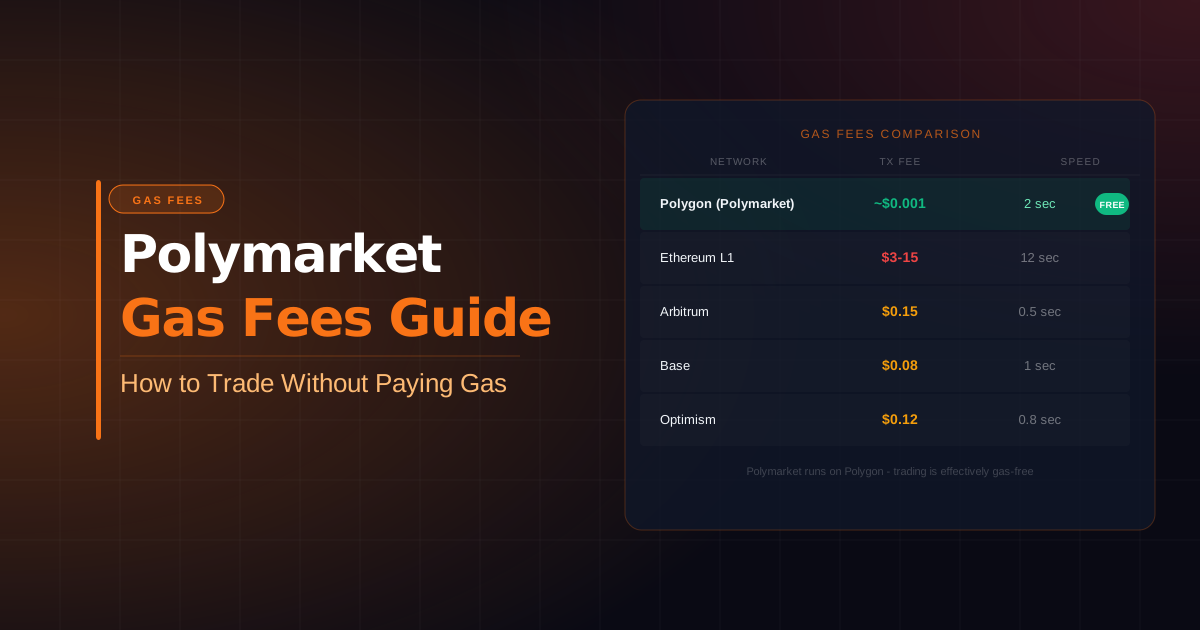
Polymarket is built on the Polygon blockchain, an Ethereum Layer 2 network known for low transaction fees and fast settlement. All trades are denominated in USDC — a regulated, dollar-pegged stablecoin issued by Circle — which eliminates exposure to cryptocurrency price volatility while keeping transactions on-chain. For a deeper technical walkthrough of the CLOB order book, USDC mechanics, and UMA oracle, see our guide on how Polymarket works.
When you trade on Polymarket, you're interacting with smart contracts deployed on Polygon. These are self-executing programs with the trade logic baked directly into the code. There is no company database storing your positions or a backend server holding your collateral. Your funds live in the smart contract, governed entirely by transparent, auditable code.
This architecture matters for legitimacy: Polymarket cannot arbitrarily freeze withdrawals, change payout rules, or run off with user funds in the way a centralized exchange could. The rules are enforced by code, not by a company's internal policies.
Non-Custodial: Your Funds, Your Keys
One of Polymarket's most important security properties is that it is non-custodial. To trade, you connect a crypto wallet (such as MetaMask or a Magic.link email wallet). Your funds are never transferred to Polymarket's company accounts — they move directly between your wallet and the on-chain smart contracts.
This stands in sharp contrast to centralized platforms like FTX, which held user funds in company accounts and famously misappropriated them. On Polymarket, even if the company's website went offline tomorrow, your USDC would still be sitting in the smart contract, accessible by interacting with the blockchain directly. The platform is the delivery mechanism; the blockchain is the vault.
On-Chain Transparency: Every Trade Is Publicly Verifiable
Because Polymarket runs on a public blockchain, every single trade, position, and settlement is permanently recorded on Polygon and viewable by anyone using a block explorer like PolygonScan. This level of transparency is simply impossible with traditional financial platforms. For a practical guide to querying this data, see how to use Polymarket's on-chain data.
You can independently verify:
- The total liquidity in any market
- Your own position and cost basis
- The outcome resolution transaction and when it occurred
- The smart contract code itself, which has been open-sourced and audited
This on-chain auditability is why Polymarket attracted serious attention as a forecasting tool, not just a gambling site — and it's a key reason our full Polymarket platform review rates it highly for transparency. Journalists, academics, and analysts cite its market prices as real-time probability estimates because the financial incentives behind them are fully transparent. Some users also ask whether Polymarket constitutes gambling — a question with a nuanced legal and practical answer.
Smart Contract Security and Audits
The most significant technical risk on any DeFi platform is a smart contract vulnerability — a bug that could allow an attacker to drain funds. Polymarket has taken this seriously. The platform's smart contracts have been audited by third-party security firms, and the core contract architecture has been running in production since 2020 without a major exploit.
That said, no smart contract is 100% immune to risk. The security track record over five-plus years of operation is a meaningful signal, but it is not a guarantee. Any user holding large sums in DeFi smart contracts should treat that risk as real, even if historically small.
Regulatory Status: Legal Complexity
Here's where Polymarket's legitimacy becomes more nuanced. In 2022, Polymarket settled with the U.S. Commodity Futures Trading Commission (CFTC) for $1.4 million and agreed to block U.S. users from the platform. This is why Polymarket requires geolocation verification and does not serve users in the United States.
Outside the U.S., Polymarket operates in a largely permissive regulatory environment. Most jurisdictions have not specifically regulated decentralized prediction markets, and Polymarket's on-chain, non-custodial architecture makes it significantly harder to regulate than a centralized service. For international users, there is no indication of illegal activity in using the platform — though users should always check their own country's laws. Our dedicated article on whether Polymarket is legal in the US covers the regulatory picture in full detail. Polymarket also occupies a distinct legal category from sports betting platforms, which face stricter licensing in most jurisdictions.
The CFTC settlement is sometimes cited as evidence that Polymarket is illegitimate. The opposite reading is more accurate: Polymarket engaged with regulators, paid a fine, and implemented compliance measures. That's what legitimate businesses do when they encounter regulatory friction.
How Market Resolution Works: UMA Protocol
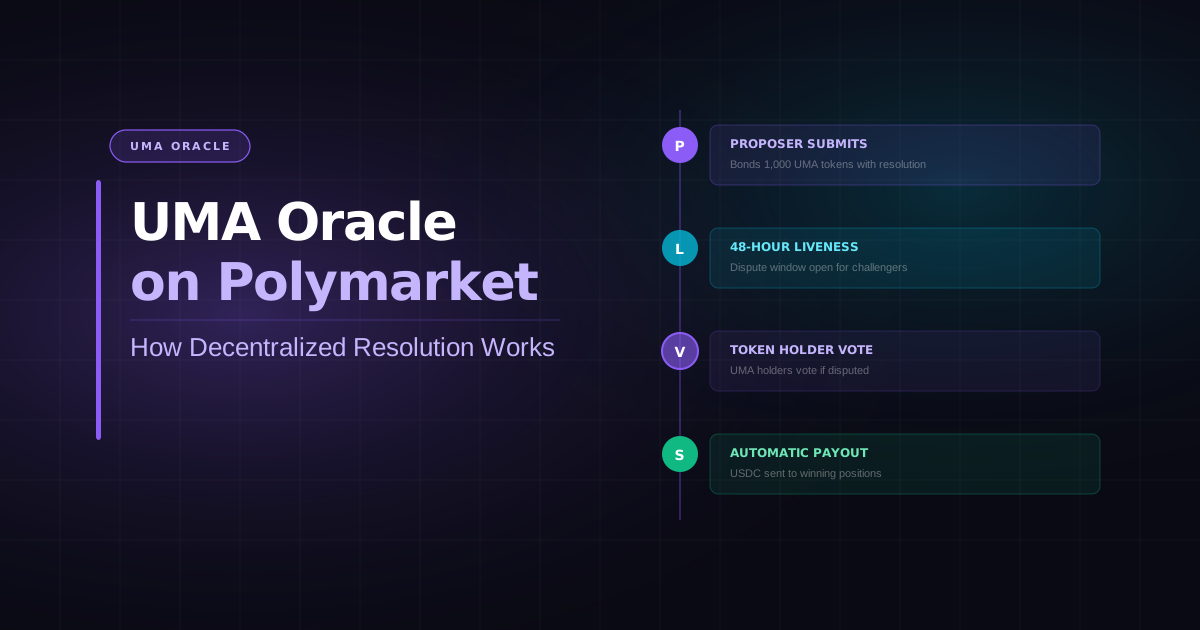
Every market on Polymarket must eventually resolve — someone has to declare whether "Candidate X wins the election" is YES or NO. Polymarket uses the UMA Protocol, a decentralized optimistic oracle, to handle this.
Here's how it works: when a market resolves, a proposed outcome is submitted. If no one disputes it within the challenge window, it settles automatically. If someone disputes the outcome (by staking UMA tokens), the dispute goes to a decentralized vote of UMA token holders who earn rewards for voting honestly on the correct outcome.
This system means that no single party — including Polymarket itself — has unilateral control over how markets resolve. It's a clever solution to the "who decides the truth" problem that plagued early prediction markets. That said, highly ambiguous market rules have occasionally led to contentious resolutions, which is a real but manageable risk for sophisticated traders.
What Risks Do Exist?
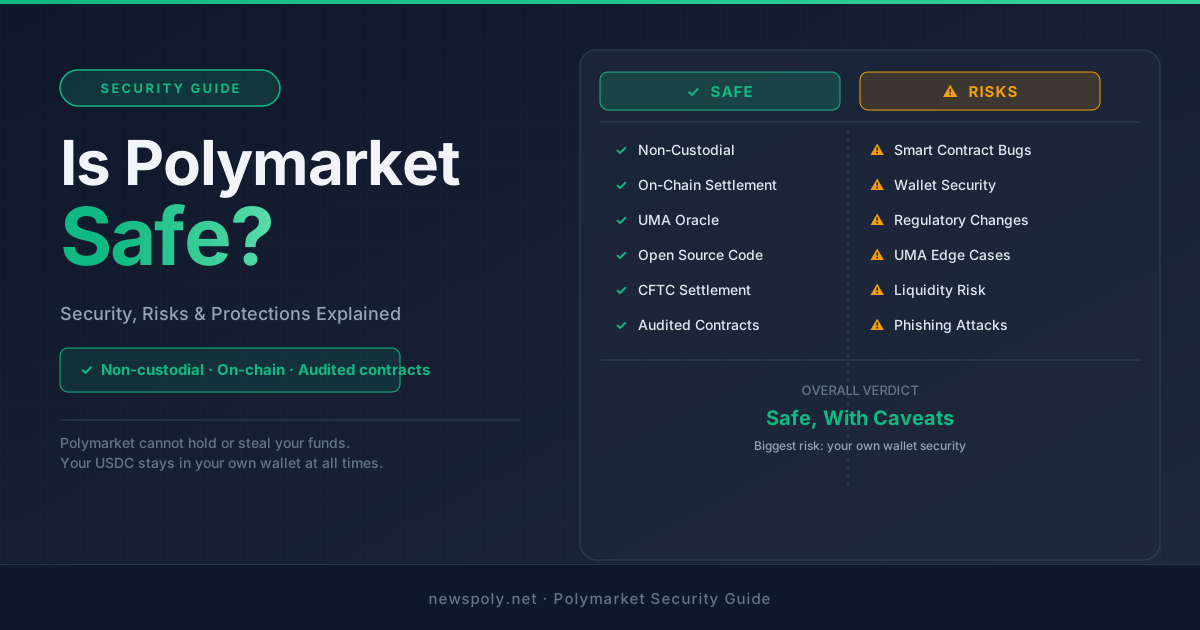
Being legitimate doesn't mean risk-free. Honest users should understand these real risks:
- Smart contract risk: A bug or exploit in the underlying contracts could theoretically lead to fund loss. This risk has not materialized in five years but cannot be ruled out. Our dedicated article on Polymarket's security model and wallet safety covers these risks in full detail.
- Resolution disputes: Ambiguous market questions can lead to unexpected resolution outcomes, particularly if the written rules don't perfectly capture the intended event.
- Thin market manipulation: Low-liquidity markets are susceptible to price manipulation by large traders, which can distort the odds in markets with limited activity.
- Regulatory changes: Future regulatory action in your jurisdiction could affect access to the platform.
- USDC/Circle counterparty risk: USDC is a regulated stablecoin backed by U.S. dollars, but it is issued by a private company (Circle) that carries its own counterparty risk, however small. Our Polymarket fees guide also details the platform's cost structure so there are no surprises when trading.
None of these risks make Polymarket illegitimate — they make it a platform that requires informed participation, like any financial product.
Automating Your Polymarket Strategy
For traders who want to engage with Polymarket systematically — whether that means copy-trading top performers, running automated strategies, or managing positions across multiple markets — manual trading can become a bottleneck quickly. PolyCopyTrade is a non-custodial copy trading platform built on Polymarket that automates this process: it identifies consistently profitable wallets and mirrors their trades in real time, directly from your own wallet.
The Bottom Line
Polymarket is a legitimate, operational prediction market platform with a verifiable five-year track record, institutional backing, transparent on-chain infrastructure, and a credible approach to regulatory compliance. It is not a scam. It is not anonymous. Every dollar of trading volume is traceable on the Polygon blockchain.
Its non-custodial design means users never have to trust Polymarket the company with their funds — only the audited smart contracts. The regulatory settlement with the CFTC, rather than being a red flag, demonstrates that Polymarket operates as a real business subject to real legal accountability.
For international users seeking an honest, transparent prediction market platform, Polymarket remains one of the most credible options available. If you want a regulated alternative, see our Polymarket vs Kalshi comparison for an analysis of the CFTC-regulated option. Just trade with open eyes — and with an understanding of the specific risks outlined above.
Frequently Asked Questions
Is Polymarket legal to use?
Polymarket is not available to U.S. users following a 2022 CFTC settlement. For users outside the United States, Polymarket operates in a largely unregulated space and is accessible in most countries. Always verify the regulations in your specific jurisdiction before trading.
Can Polymarket steal my funds?
No. Polymarket is non-custodial — your USDC is held in on-chain smart contracts on the Polygon blockchain, not in Polymarket's company accounts. The platform cannot unilaterally freeze or seize user funds. Even if Polymarket's website shut down, your funds would remain accessible on-chain.
How does Polymarket decide who wins a market?
Market outcomes are resolved through the UMA Protocol, a decentralized oracle system. A proposed resolution is submitted and challenged within a dispute window. If disputed, UMA token holders vote on the correct outcome using a decentralized governance process, removing any single point of control over resolution.
What happens if there's a bug in Polymarket's smart contracts?
Smart contract bugs are a real, if historically rare, risk in DeFi. Polymarket's contracts have been audited and have operated without a major exploit since 2020. However, no audit eliminates all risk. Users with large positions should treat smart contract risk as a genuine consideration and size their exposure accordingly.