Gas fees are one of the most misunderstood parts of trading on Polymarket — yet the reality is remarkably simple. Because Polymarket runs on Polygon, a Layer 2 blockchain, every on-chain action costs a fraction of a cent rather than the dollars or tens of dollars you’d pay on Ethereum mainnet. This guide breaks down exactly what gas fees are on Polygon, which Polymarket actions trigger them, current cost ranges, and how to make sure you always have enough MATIC to keep trading without interruption.
Why Polymarket Uses Polygon for Low Fees
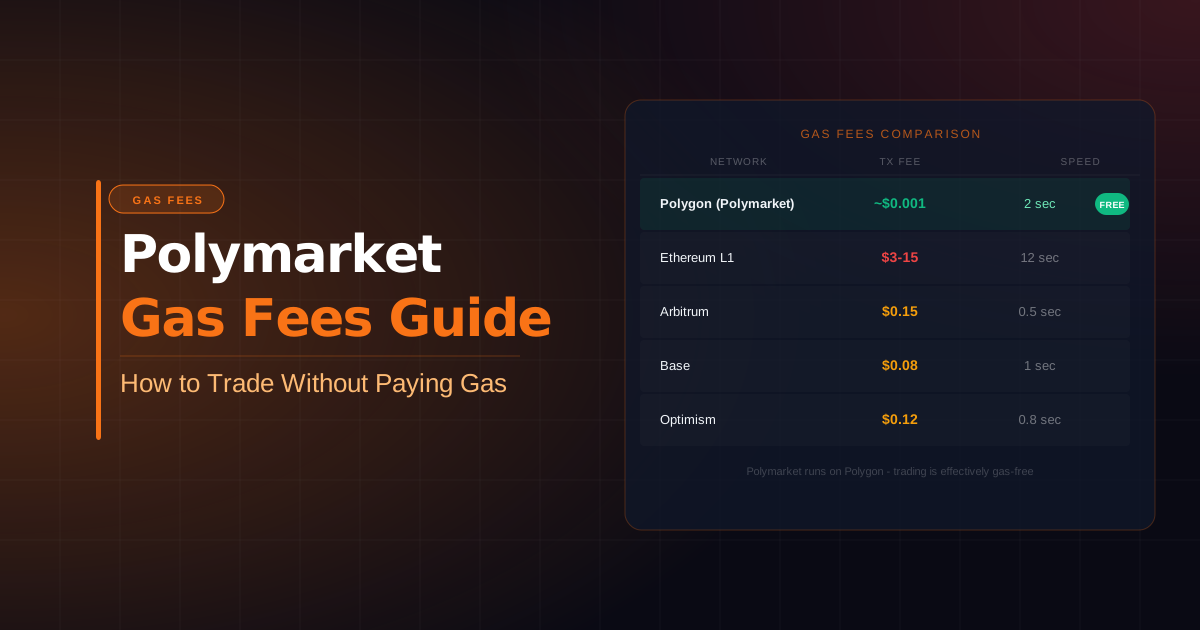
Polymarket was built on Polygon from the outset, and the reason is purely economic: prediction market trading involves many small transactions. Placing a single bet, approving a new token, or withdrawing winnings all require on-chain computation. On Ethereum mainnet those operations could each cost $5–$50 during periods of network congestion — a fee that would dwarf the profit on a $20 trade. Polygon solves this by processing transactions on its own high-throughput chain and periodically checkpointing state back to Ethereum, giving you Ethereum-grade security at a fraction of the cost.
Polygon can process thousands of transactions per second and achieves block finality in roughly two seconds. For a platform where many traders are simultaneously opening and closing positions, this throughput and speed are essential. The near-zero gas environment is not a temporary promotional feature — it is a structural property of how Polygon works, and it is why Polymarket has remained on the network since launch. You can read more about the broader cost picture in our Polymarket fees guide, which covers the platform’s 2% winning-payout fee alongside gas.
What Are Gas Fees on Polygon?
Every transaction on any blockchain — whether it’s a token transfer, a smart-contract interaction, or a market approval — requires computational work from the network’s validators. Gas fees are the payment you make to compensate those validators. On Polygon, gas is denominated in MATIC, the network’s native token (now transitioning to POL under Polygon’s 2.0 upgrade, though the underlying mechanics remain the same).
Gas cost is calculated as: Gas Used × Gas Price. Gas used depends on the complexity of the transaction — a simple token transfer uses less gas than executing a smart-contract function. Gas price is set by network demand and expressed in “gwei” (one billionth of a MATIC). When the Polygon network is quiet, gas prices are extremely low. Even during busy periods, they remain a tiny fraction of Ethereum mainnet prices.
You never see a gas prompt when Polymarket covers the fee on your behalf (more on that below), but when gas is your responsibility — such as during manual withdrawals — MetaMask or your wallet will display the estimated fee in MATIC and its approximate USD value before you confirm.
Current Gas Fee Ranges on Polygon
As of March 2026, typical Polygon gas fees for Polymarket-related transactions fall into the following ranges:
| Action | Typical Gas Cost (USD) | Who Pays |
|---|---|---|
| Place or cancel a trade | $0.001–$0.005 | Polymarket (gasless relay) |
| USDC approval (first-time) | $0.002–$0.008 | You |
| CTF approval (first-time) | $0.002–$0.008 | You |
| Deposit USDC to Polymarket | $0.001–$0.005 | You |
| Withdraw USDC to wallet | $0.003–$0.01 | You |
| Merge/split positions | $0.002–$0.007 | You |
| Redeem winning shares | $0.001–$0.005 | Polymarket (gasless relay) |
These figures assume typical network conditions. During periods of unusually high Polygon activity, fees may temporarily rise 2–3×, but even at peak congestion they remain well under a cent for most operations. Compare this with depositing on Polymarket where the one-time approval transactions are the main gas cost you’ll incur as a new user.
MATIC for Gas: How to Get It
To pay for any on-chain transaction where the fee falls to you — approvals, deposits, manual withdrawals — your wallet needs a small balance of MATIC on the Polygon network. You do not need a large amount. For most traders, $1–$2 worth of MATIC is enough to cover dozens of transactions over several months. For guidance on how much USDC to start with, see our Polymarket minimum deposit guide.
Option 1: Polymarket’s Free MATIC Faucet
Polymarket operates its own MATIC faucet for new users. When you first connect your wallet and the platform detects a zero or very low MATIC balance, it will offer to send you a small amount of MATIC for free — typically enough to complete your initial approval transactions. This faucet is accessible directly from the Polymarket interface during the onboarding flow. It covers the cost of your first one or two approvals without requiring you to buy MATIC anywhere.
Option 2: Buy MATIC on an Exchange
If you need more MATIC than the faucet provides, or if you’re returning to the platform after depleting your gas balance, you can purchase MATIC on any major centralised exchange (Coinbase, Kraken, Binance) and withdraw it to your wallet on the Polygon network. Always double-check the withdrawal network — selecting Ethereum mainnet will send MATIC as an ERC-20 token, which cannot be used to pay Polygon gas. You need native MATIC on Polygon.
Option 3: Bridge ETH and Swap
If you already have ETH on Polygon (perhaps from a previous bridge), you can swap a tiny amount to MATIC using a DEX such as QuickSwap or 1inch. This is the least beginner-friendly route but useful if you have Polygon-native ETH sitting idle.
Which Actions Cost Gas on Polymarket?
Not every interaction with Polymarket hits the blockchain. The platform uses a gasless relayer — a system where Polymarket submits certain transactions on your behalf and absorbs the MATIC cost. Understanding which actions are gasless versus which require your own MATIC prevents the frustrating experience of a failed transaction mid-withdrawal.
Actions Polymarket Covers (Gasless)
- Placing and cancelling orders. When you click “Buy” or “Sell” on a market, Polymarket’s relayer submits the order transaction. Your MATIC balance is not touched.
- Redeeming resolved positions. After a market settles, winnings are distributed automatically and the gas is covered by the platform.
- Most in-app UI actions. Navigation, viewing positions, and checking order history are off-chain reads — no gas involved at all.
Actions You Pay Gas For
- First-time USDC approval. Before you can deposit USDC into Polymarket’s smart contract, your wallet must sign an ERC-20 approval transaction. This is a one-time cost per wallet. See the full walkthrough in our Polymarket USDC guide.
- First-time CTF (Conditional Token Framework) approval. Polymarket’s prediction shares are conditional tokens. Another one-time approval is required for the CTF contract. Again, this happens only once per wallet.
- Depositing USDC. Each time you send USDC from your wallet into Polymarket, a small on-chain transfer occurs that you pay gas for.
- Withdrawing USDC. Initiating a withdrawal from Polymarket to your external wallet is an on-chain transaction that requires MATIC from your wallet balance.
- Manual position splits/merges. Advanced traders who split positions into component tokens or merge them back pay gas for those contract calls.
The practical implication: if you top up MATIC once when you first join, you likely won’t need more for weeks or months unless you are withdrawing frequently. For a complete look at the withdrawal process, see our guide on how to withdraw from Polymarket.
Gas Fee Comparison: Polygon vs Ethereum Mainnet
To appreciate just how cheap Polygon gas is, consider what the same Polymarket-style transactions would cost on Ethereum mainnet. These are real-world figures based on typical mainnet conditions in early 2026.
| Transaction Type | Polygon (MATIC) | Ethereum Mainnet (ETH) | Cost Difference |
|---|---|---|---|
| ERC-20 token approval | ~$0.005 | ~$3–$15 | 600x–3,000x cheaper |
| USDC transfer | ~$0.003 | ~$2–$8 | 650x–2,600x cheaper |
| Smart-contract interaction | ~$0.008 | ~$8–$40 | 1,000x–5,000x cheaper |
| Position redemption | ~$0.004 | ~$5–$25 | 1,250x–6,250x cheaper |
If Polymarket had been built on Ethereum mainnet, a trader making ten transactions a month would pay $50–$200 in gas alone. That figure would make micro-trading or small-stake markets economically unviable. Polygon’s fee structure is the direct enabler of Polymarket’s low-minimum, high-frequency trading model. For beginner context on why this matters to your overall P&L, see our Polymarket beginner guide.
How to Minimise Gas Costs on Polymarket
Even at fractions of a cent, there are sensible practices that reduce your total gas spend — especially if you trade frequently or withdraw often.
1. Complete Approvals Once
The USDC approval and CTF approval are one-time transactions per wallet. Do both in a single session when you first set up your account. You will never need to pay those costs again unless you create a new wallet address.
2. Batch Your Deposits
Each deposit triggers a gas fee. If you plan to add $500 to your account, make one $500 deposit rather than five $100 deposits. You pay gas once instead of five times. The fee difference is tiny in absolute terms, but the habit of batching applies equally to larger sums.
3. Time Withdrawals Strategically
Polygon gas prices fluctuate with network demand. Withdrawals are non-urgent — you can choose when to initiate them. Check a Polygon gas tracker (PolygonScan displays current gas prices in real time) and withdraw during off-peak hours if you want to minimise cost. In practice, the difference between “expensive” and “cheap” Polygon gas is so small that this optimisation is purely academic for most users.
4. Keep a Small MATIC Reserve
Keep at least 0.5–1 MATIC in your wallet at all times. This covers dozens of deposit or withdrawal transactions. Running out of MATIC mid-session is the most common gas-related frustration on Polymarket — a $0.50 reserve eliminates it entirely.
5. Use the Platform’s Gasless Features Where Possible
If you are in no rush to move funds off-platform, let winnings accumulate inside Polymarket. Every trade and resolution is gasless. You only need MATIC for the final withdrawal step. Keeping a running balance on the platform and withdrawing in one larger batch is cheaper than micro-withdrawing after every won market.
Does Polymarket Cover Gas Fees for You?
Yes — partially and strategically. Polymarket uses a meta-transaction relayer (EIP-2771 compatible) to sponsor gas for the most common trading actions: placing orders, cancelling orders, and redeeming resolved positions. From a user experience perspective, these feel like instant, zero-cost actions because Polymarket absorbs the MATIC fee on your behalf.
The actions that remain your responsibility — approvals, deposits, and withdrawals — all involve moving funds in or out of the platform’s custody. These require your direct wallet signature and cannot be relayed in the same way without compromising the trustless nature of the smart contract. In plain terms: Polymarket can cover the gas for what happens inside the platform, but moving money across the platform boundary still requires your own MATIC.
This design keeps the trading experience frictionless for the vast majority of users while maintaining the on-chain security guarantees that make Polymarket non-custodial. Your funds are never held by Polymarket — they live in audited smart contracts — and that architecture is why manual withdrawals require your wallet’s own gas.