Polymarket is not publicly traded. You cannot buy Polymarket stock on any exchange. The company is privately held, venture-backed, and has given no public indication of a near-term IPO. This guide covers everything currently known about Polymarket’s ownership, funding history, valuation, and the investors behind the platform — and what it means for traders who want exposure to the prediction market industry’s growth.
Is Polymarket a Public Company?
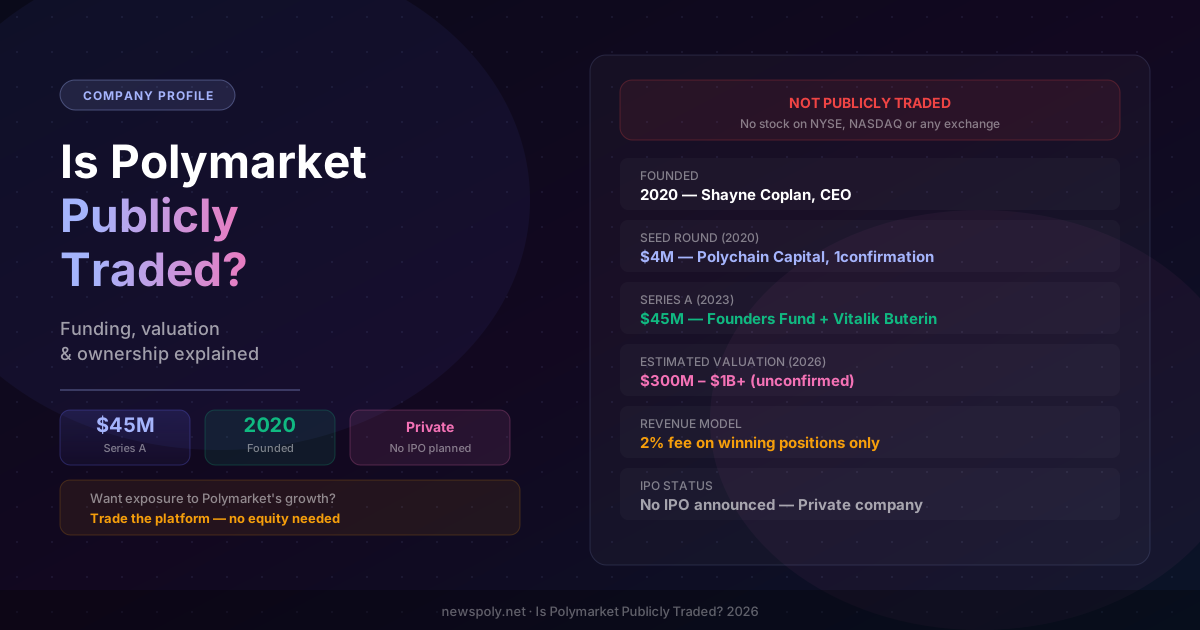
No. Polymarket is a private company incorporated as Polymarket Inc. (formally Cayman Islands-domiciled for regulatory purposes). Its shares are not listed on any stock exchange — not the NYSE, NASDAQ, or any international exchange. There is no publicly available share price, no quarterly earnings disclosure, and no mechanism for retail investors to buy equity in the company through a brokerage account.
Who Founded Polymarket?
Polymarket was founded in 2020 by Shayne Coplan, who serves as CEO. Coplan started building Polymarket while attending New York University, launching the platform in May 2020. His background is in software engineering and decentralised finance — Polymarket was one of the first major applications to bring prediction market mechanics to a public blockchain infrastructure.
Coplan has maintained a deliberately low public profile compared to many crypto founders, rarely giving interviews and keeping Polymarket’s development focused on product and trading volume rather than media presence. This changed somewhat following Polymarket’s surge in visibility during the 2024 US presidential election cycle, when the platform attracted significant mainstream media coverage for its prediction accuracy.
Polymarket Funding Rounds
Polymarket has raised venture capital across multiple rounds:
- Seed round (2020) — $4 million, led by Polychain Capital, with participation from 1confirmation and other crypto-native investors
- Series A (2023) — $45 million, led by Founders Fund (Peter Thiel’s venture firm), with participation from Vitalik Buterin (Ethereum co-founder) and other prominent crypto investors
- Additional raises — Smaller strategic rounds and grants have been reported but not fully disclosed publicly
The Series A raise was particularly significant: Founders Fund’s involvement brought mainstream venture credibility to the prediction market category, and Vitalik Buterin’s participation as an individual investor signalled strong alignment with the Ethereum ecosystem (despite Polymarket operating on Polygon rather than Ethereum mainnet).
What Is Polymarket Worth? Valuation Estimates
Polymarket’s valuation is not publicly disclosed. Based on the Series A raise of $45 million and standard venture capital dilution norms, industry analysts have estimated Polymarket’s implied valuation at between $200 million and $500 million at the time of the Series A close.
Since then, Polymarket’s trading volume has grown dramatically — the platform processed over $1 billion in monthly trading volume during the 2024 US presidential election cycle, a figure that would substantially change its valuation if another round were conducted today. As of early 2026, no new funding round has been publicly announced, so current valuation figures are speculative.
How Does Polymarket Make Money?
Polymarket charges a 2% fee on all winning positions. This fee is taken at settlement: if you bet $100 on an outcome that resolves YES at $1, you receive $98 rather than $100 after the fee. There is no fee on losing positions. For a complete breakdown of all costs involved in trading, see our Polymarket fees guide. To understand how Polymarket works at the infrastructure level — including the CLOB, USDC settlement, and UMA oracle — see our dedicated mechanics guide.
At the trading volumes Polymarket processes in active election and political markets, this fee structure generates substantial revenue. During the 2024 election cycle, Polymarket reported cumulative trading volume in the billions of dollars — 2% of profits from that volume represents significant fee income even accounting for the fact that the fee only applies to winning positions.
Can You Invest in Polymarket?
Direct equity investment in Polymarket is not available to retail investors. The company has not announced any plans for a public offering, direct listing, or crowdfunding raise. Participation in future Polymarket funding rounds would require being an accredited investor with existing relationships in the venture capital ecosystem.
The practical alternative for retail investors who want financial exposure to the prediction market industry’s growth is to participate as a trader on the platform itself. Generating returns through trading on Polymarket is the most accessible way to benefit from the platform’s growth in liquidity and market quality. Our guide to making money on Polymarket covers the full approach. Before committing capital, our Polymarket platform review and guide to platform legitimacy provide a thorough assessment of the trading environment and on-chain security model. Those evaluating alternatives to Polymarket — including Kalshi, Betfair, and Metaculus — will find a full comparison in our dedicated guide. For traders specifically concerned about fund safety and smart contract risks, our guide to Polymarket's security model covers the non-custodial architecture in detail.
Is a Polymarket IPO Likely?
As of 2026, there are no credible reports of a Polymarket IPO in preparation. Several factors make a near-term IPO unlikely:
- Regulatory uncertainty — The CFTC settlement from 2022 and the evolving legal status of Polymarket in the US make a public offering complex from a disclosure and compliance perspective
- Stage of growth — Polymarket is still in an aggressive growth phase. Venture-backed companies typically pursue IPOs when growth is slowing and they need public market liquidity, not when they’re still expanding rapidly
- Crypto market structure — Many crypto-native companies have explored token issuance rather than traditional equity IPOs as an alternative liquidity mechanism. Polymarket has not issued a token, but this remains a theoretical alternative to a traditional IPO
Frequently Asked Questions
Is Polymarket publicly traded?
No. Polymarket is a private company. Its shares are not listed on any stock exchange and there is no public mechanism to buy Polymarket equity. The company is venture-backed, with investors including Founders Fund and Vitalik Buterin.
How much is Polymarket worth?
Polymarket’s valuation is not publicly disclosed. Based on its $45 million Series A in 2023 and subsequent growth in trading volume, industry estimates range from $300 million to over $1 billion as of 2026, but these figures are speculative without a new funding round or public disclosure.
Who owns Polymarket?
Polymarket is majority-owned by its founder Shayne Coplan and its venture investors, primarily Founders Fund and Polychain Capital. The exact ownership structure and cap table are not publicly disclosed. As a private company, Polymarket has no obligation to disclose ownership percentages.
Does Polymarket have a token?
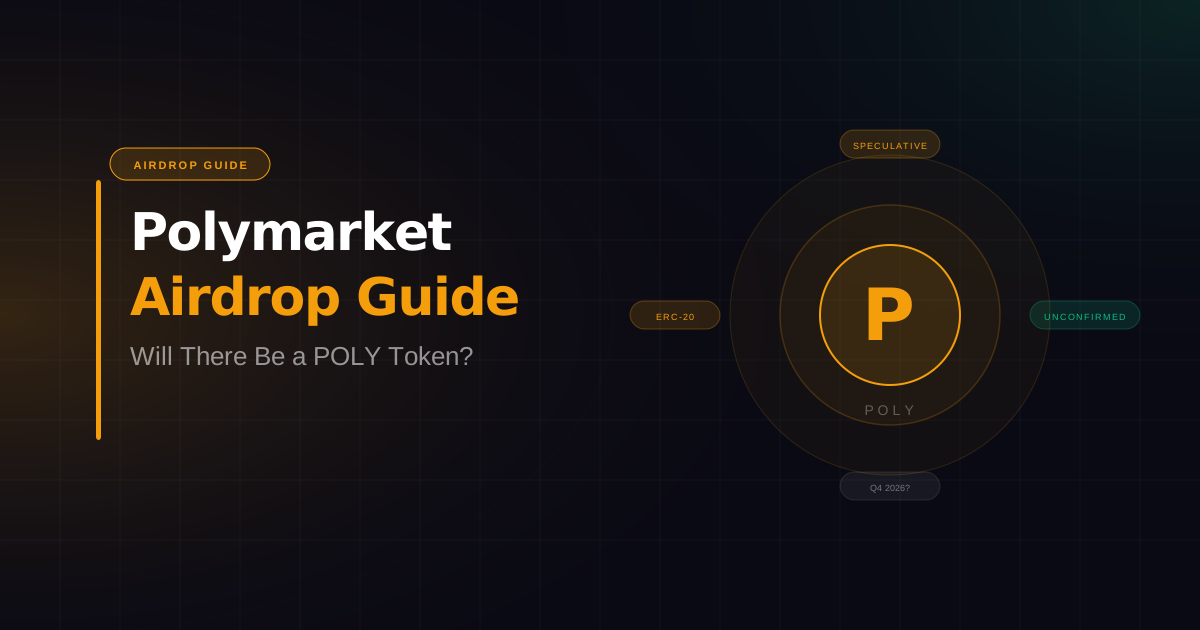
No. As of 2026, Polymarket has not issued a native token. All trading on the platform uses USDC. Speculation about a potential Polymarket token has circulated periodically in the crypto community, but no official announcement has been made. Any claims about a Polymarket token from unofficial sources should be treated as unverified.